Traditional e-waste processing—long reliant on manual sorting and labor-intensive dismantling—is facing a critical shift. Challenges such as low throughput, inconsistent sorting quality, and safety risks are being solved by the integration of Artificial Intelligence (AI) and Robotics.
As we enter the era of Recycling 4.0, AI-driven smart recycling is becoming the global standard for maximizing efficiency, metal recovery rates, and operational safety.
1. AI Machine Vision: The End of Manual Sorting Errors
The foundation of smart recycling lies in AI Visual Recognition and machine learning. Through high-speed cameras and deep learning algorithms, recycling systems can now identify materials with precision that exceeds human capability.
Advanced Classification: Intelligent systems can accurately distinguish between circuit board models, semiconductor types, and precious metal concentrations in milliseconds.
Near-Perfect Accuracy: Compared to manual labor, AI-driven sorting achieves accuracy rates of over 99%, eliminating the common errors caused by human fatigue or oversight.
High Throughput: These systems operate 24/7, significantly increasing the volume of materials processed per hour.
2. Robotic Dismantling: Safety and Precision in High-Risk Zones
Robotic automation is replacing manual labor in some of the most hazardous stages of e-waste processing.
Precision Disassembly: Intelligent robotic arms, guided by real-time sensor data, can precisely dismantle complex devices, separating high-value circuit boards from batteries and plastic housings.
Safety First: By automating the handling of potentially toxic or explosive components (such as aged lithium batteries or mercury switches), enterprises significantly reduce workplace hazards and insurance liabilities.
Standardized Output: Automated dismantling ensures that every piece of e-scrap meets exact specifications for export or downstream refining, a key factor in stabilizing trade prices.
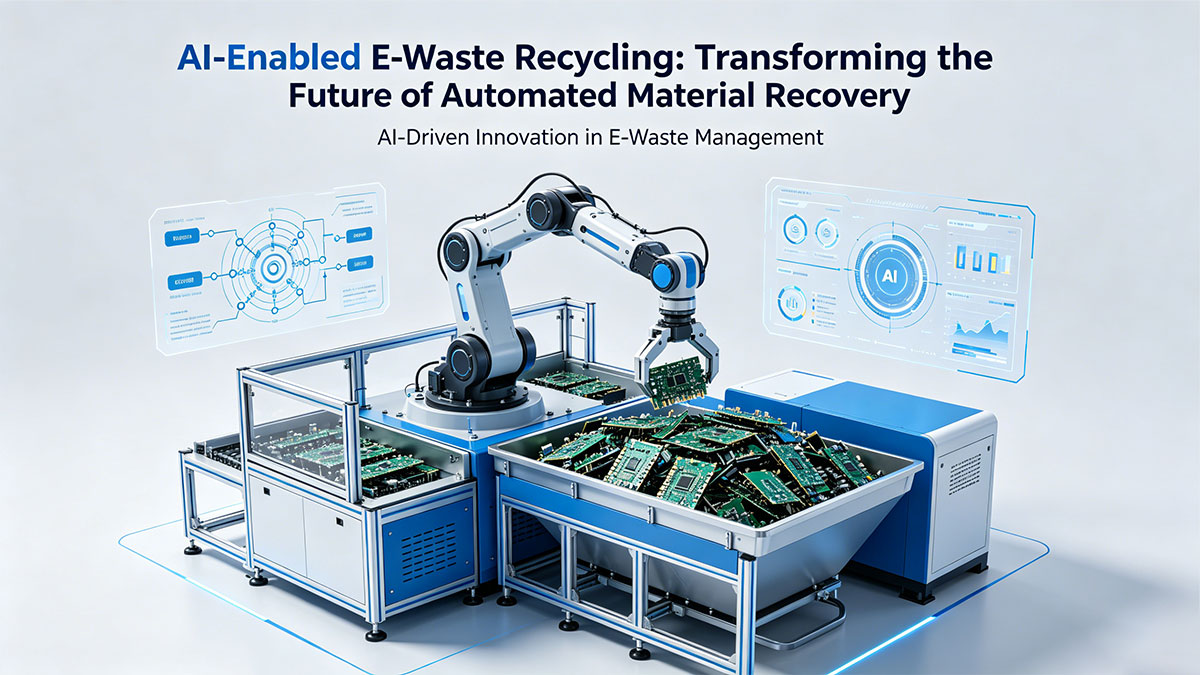
3. Big Data & Predictive Analytics: Optimizing the Supply Chain
Beyond the physical sorting floor, AI provides a digital brain for the entire recycling operation through Big Data Management.
Real-Time Yield Monitoring: Systems track material input versus metal yield in real-time, allowing facility managers to adjust processing strategies based on current market prices for gold, copper, and palladium.
Intelligent Traceability: AI-powered platforms create a digital “birth certificate” for recycled materials. This provides the transparent data support required for global trade compliance and high-level ESG (Environmental, Social, and Governance) reporting.
4. Conclusion: The Inevitable Evolution of the Circular Economy
AI smart recycling is the definitive future of the green circular economy. By solving the pain points of traditional processing—inefficiency and safety risks—AI technology enables a high-precision, high-safety production model.
For the global e-waste industry, the transition to intelligent automation is not just an upgrade; it is an essential evolution to meet the rising demand for sustainable resource management and industrial efficiency.